









How ID card encoding works and types of encoding
Share
What Is ID Card Encoding?
In government and corporate settings, secure identification badges are important for access and identification purposes. Encoding simply means storing information—such as an employee ID number—on a card so that a reader can verify it.
Different technologies store data in different ways. Here's a quick overview of how encoding works and which type fits your organization best. Encoding adds machine-readable data to a card—a magnetic stripe, chip, or radio frequency signal—so that readers can identify and authenticate the holder. These cards unlock doors, log users into systems, or track entry times securely and efficiently.
- Access control
- Employee ID badges
- Visitor management
- ID card printers & supplies
Proximity Cards (Prox)
How it works: Prox cards use RFID technology to send an encoded ID number to a reader when held nearby—no swiping required.
Ideal for: High-traffic areas and quick, contactless access.
Used by: Offices, campuses, and government facilities.
Magnetic Stripe Cards
How it works: Information is encoded onto a stripe and read when swiped through a reader.
Ideal for: Basic access, time clocks, and internal use.
Used by: Offices and facilities using low-cost ID systems.
- Benefits: Inexpensive and easy to replace.
- Limitations: Lower security; stripes can wear out.
HID Cards
How it works: HID cards are the secure proximity or smart cards used by most government and corporate facilities.
Ideal for: Large organizations with complex access systems.
Used by: Corporations, agencies, and multi-site offices.
- Reliable and widely supported
- Scalable for large systems
Smart Chip Cards
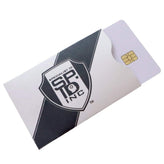
How it works: Using an embedded chip—contact or contactless—these cards process and store data securely.
Ideal for: High-security systems, computer logins, and multi-function IDs.
Used by: Federal agencies, corporations, and research facilities.
Choosing the Right Encoding Type
Conclusion
The type of ID encoding you choose depends on your balance of security, cost, and convenience. Whether you require simple swipe cards or advanced smart badges, Specialist ID offers encoding-compatible cards, reels, and holders to suit every program.