







How to Set Up a Secure Sign-In System for Your Facility
Share
Knowing who is in your facility at all times is not optional. Whether you run a hospital, a corporate office, or a school, a consistent visitor management workflow protects your staff, your assets, and the people in your care. This guide covers the core pieces: logging, badging, color-coding, and access control.
Start With a Reliable Sign-In Log
Every visitor management workflow starts with a record of who entered, when, and why. A paper log book works well for low-traffic lobbies. For higher-volume facilities or environments with sensitive populations, a digital sign-in platform is a better fit. It timestamps entries automatically, allows real-time lookups, and can integrate directly with a visitor badge printer so a badge prints the moment sign-in is complete.
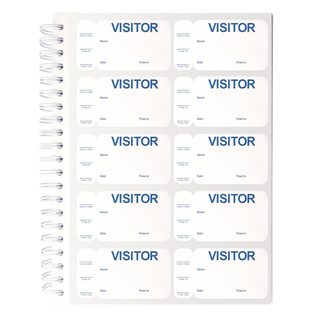
An easy starting point is a combined kit like the Expiring Visitor Badge and Log Book, which includes 480 self-expiring badges alongside a matching sign-in log so both pieces are ready to use out of the box. If your visitors tend to stay multiple days or you do not need expiration, the Non-Expiring Visitor Badge and Log Book is a solid alternative.
Choose the Right Badge Format
Not every facility needs the same solution. Here is how the two main options compare:
| Feature | Self-Expiring Sticker Badge | Printed Visitor Pass |
|---|---|---|
| Setup required | None | Printer, supplies, software |
| Photo included | No | Yes (with camera integration) |
| Expiration enforcement | Automatic (chemical reaction) | Manual or software-enforced |
| Customization | Limited | High (name, photo, zone, barcode) |
| Best for | Healthcare, schools, low-tech environments | Corporate, government, high-security sites |
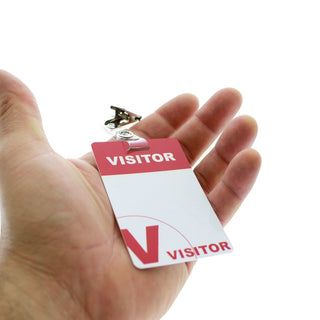
Self-expiring visitor badges are peel-and-apply stickers that display VOID or change color after 24 hours, making it impossible to reuse yesterday's credential. No printer, no electricity, no training required. The Self Expiring Visitor Temp Badges (T2014) and the One-Step Thermal Printable Self-Expiring Visitor Badges (T2011) are popular choices for hospitals and schools that need a fast, foolproof solution. For visitors who stay longer than a single day, the Manual One-Week Expiring TIMEbadge "VISITOR" extends coverage to a full week.
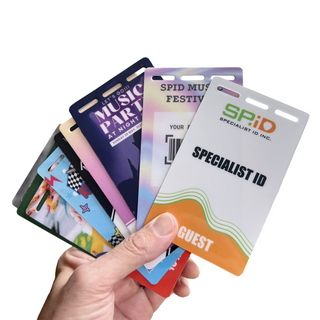
When you need a badge that includes a visitor's photo, name, host employee, and access zone, a visitor badge printer is the right call. On-demand printed passes offer a higher level of identity verification and are significantly harder to share or impersonate. Pair any direct-to-card printer with Premium Blank PVC Cards or use Printable Expiring Visitor Badge Roll Stickers for a thermal printer setup that combines print-on-demand with built-in expiration.
Use Color-Coding to Make Access Visible
Color-coded badges let any staff member identify who belongs where without reading fine print. A simple four-tier system covers most facilities:
- Blue or green: full-time employees and credentialed staff
- Yellow or orange: vendors and contractors (designated work areas only)
- Red or pink: general visitors (public areas and escorted zones)
- White: temporary or provisional staff (role-specific, time-limited)
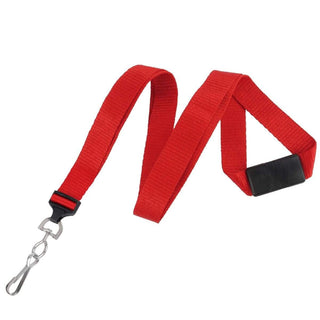
A Red Printed Visitor Lanyard is a simple and effective way to make general visitors instantly recognizable across a large facility. For contractors, the Manual One-Week Expiring TIMEbadge "CONTRACTOR" applies the same expiration logic to a vendor-specific credential. Post a small reference card at each entry point so any staff member can enforce the color system consistently, regardless of their role.
Define Escort and Badge Return Rules
A visitor badge system is only as strong as the process around it. Decide which areas require a staff escort before a visitor arrives, and communicate that at sign-in rather than after the visitor has already walked away. For vendors who visit regularly, consider a temporary credential scoped to their designated work area so facilities staff do not need to shadow them on every visit.
At checkout, collect the badge. For printed passes, void or store the card. For sticker badges, a labeled collection bin at the exit sets a professional expectation. At end of shift, cross-reference the sign-in log against returned badges. Any gap needs to be resolved the same day. A Reusable Visitor Badge with Clothing-Friendly Clip works well in environments where badges are collected and reissued daily, reducing per-visit supply costs over time.
Tip: Assign a specific staff member per shift as the log keeper. Visitor logs that are everyone's responsibility tend to be no one's responsibility.
When to Add RFID
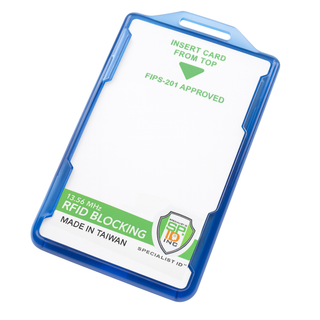
For most facilities, a sign-in log plus a badge plus color-coding is sufficient. RFID becomes worth the investment when visitor volume is high, the facility is large, or compliance requirements are strict. RFID-enabled badges log location and time automatically at every door reader, restrict access to unauthorized zones without staff involvement, and can be remotely deactivated the moment a visitor checks out. It is most common in hospitals, large corporate campuses, government buildings, and data centers. If you are evaluating a printer upgrade that supports smart card encoding, models like the Entrust Datacard DS2 (formerly Sigma DS2) and the IDP SMART-81D support contactless encoding options that can bring RFID into your visitor credentialing workflow.
Ready to upgrade your visitor management setup?
Shop Visitor Management Products